← Back to FLL Robotics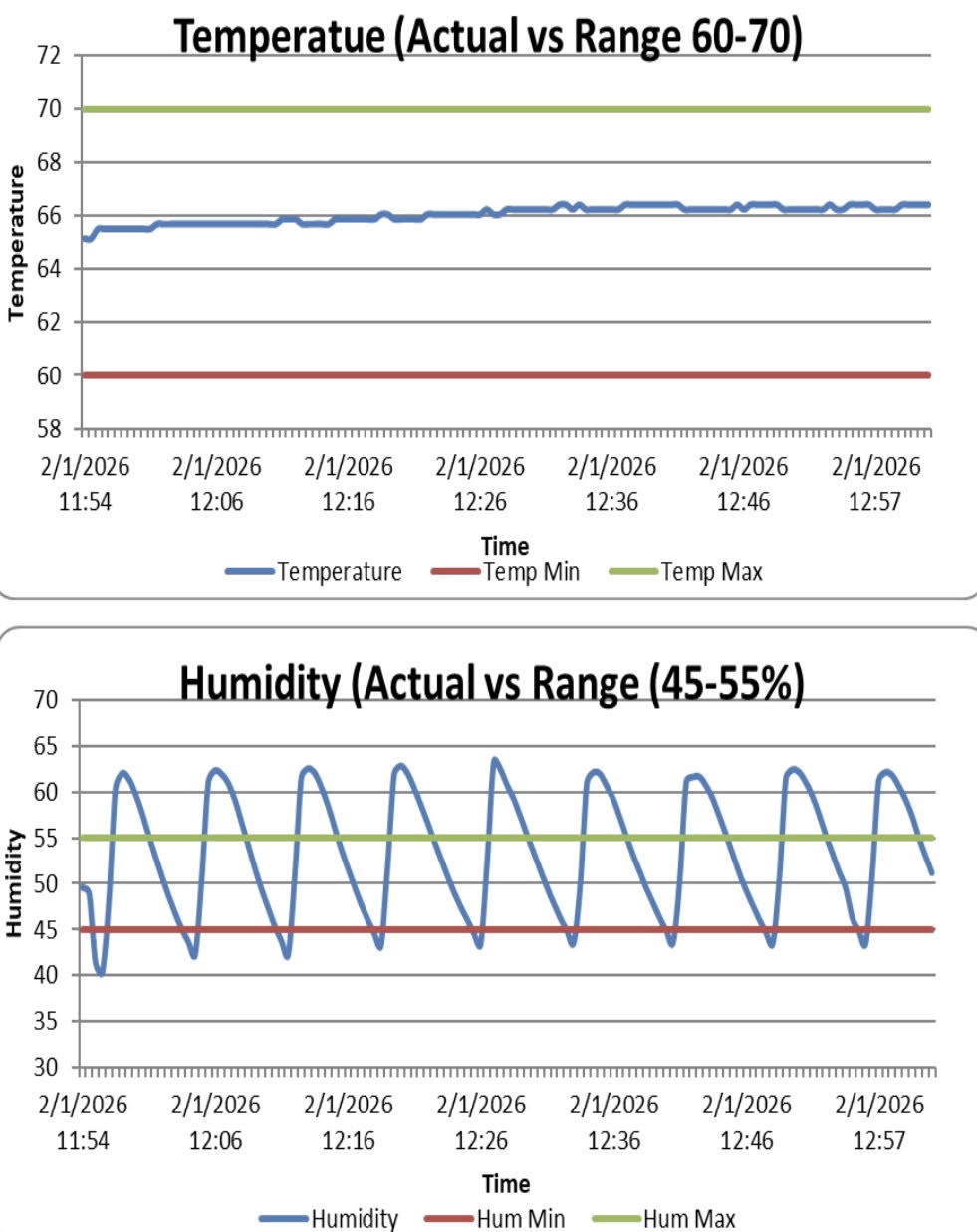
ArtiCase
Our Innovation Project
A portable chamber that actively controls humidity, air, light, and more!
What is ArtiCase?
ArtiCase is our innovative solution project - a portable chamber designed to actively control environmental conditions to preserve valuable artifacts and objects. Whether you need to protect historical documents, delicate artwork, or museum collections, ArtiCase delivers precise climate control in a compact, transportable form.
The name ArtiCase merges "artifact" and "case" — reflecting our mission to create the ideal protective environment for objects of cultural and historical significance. Using advanced sensors and real-time feedback, ArtiCase actively monitors and adjusts conditions to prevent the deterioration that plagues museums, archives, and collectors worldwide.
Key Features
💧 Humidity Control
Precisely monitors and adjusts humidity levels between 30%–70% RH to protect artifacts from moisture damage, mold, and warping
🌡️ Temperature Regulation
Maintains a stable temperature range ideal for museum collections, preventing thermal stress and material degradation
💡 Light Protection
Monitors UV and visible light exposure to prevent fading and photochemical damage to sensitive materials
📊 Real-Time Logging
Continuous data logging with timestamps for every reading, exportable for conservation records and analysis
Real-Time Dashboard
ArtiCase features a powerful real-time dashboard built with Pythonand Flask that gives you complete visibility into the chamber's conditions.
- Live sensor display — temperature, humidity, light, and air quality readings update every second
- Color-coded alerts — green for stable, yellow for warning, red for critical out-of-range conditions
- Historical graphs — view trends over 1-hour, 24-hour, or 7-day periods
- CSV export — download full data logs for conservation reporting and analysis
- Remote access — monitor and adjust settings from any device on the network
Powered by Raspberry Pi
At the heart of ArtiCase is a Raspberry Pi 4 — a credit-card sized computer that processes all sensor data and controls the chamber's systems. We chose the Raspberry Pi for its reliability, low power consumption, and rich GPIO interface for connecting sensors.
The system uses:
- DHT22 — temperature and humidity sensor (±0.9°F, ±2% RH accuracy)
- Peltier cooler — solid-state thermoelectric cooling for active temperature control
- Ultrasonic humidifier — fine-mist humidification to maintain precise RH levels
- NEO-6N GPS module — tracks location and timestamps for mobile deployments
- LCD screen — on-device display showing current readings at a glance
- Volara foam — closed-cell foam insulation lining the interior for thermal stability
All components are housed inside a lightweight plastic enclosure lined with Volara foam, keeping the chamber portable and energy-efficient while providing excellent thermal insulation.
Why ArtiCase?
ArtiCase was developed to solve a critical problem: most museums, historical societies, and private collectors lack affordable, portable solutions for preserving sensitive artifacts. Traditional museum-grade climate control systems are expensive, permanently installed, and out of reach for small institutions.
- Affordable — a fraction of the cost of commercial museum display cases
- Portable — take it anywhere; works in any room with standard power
- Autonomous — runs 24/7 without manual intervention
- Data-driven — every reading is logged for conservation audits
- Open-source — built with accessible hardware and software that anyone can replicate
📈 Measured Impact
We tested ArtiCase in a real museum environment — the Raupp Museum — where it ran continuously for 24 hoursprotecting a collection of historical artifacts.
24
Hours of continuous operation
45–55%
RH maintained within target range
<1°C
Temperature fluctuation over 24h
Testing log from the 24-hour Raupp Museum deployment
What we learned: The museum staff reported that their current display cases had no active environmental monitoring — they relied on passive silica gel packs and manual checks. ArtiCase provided, for the first time, continuous data on what their collection was actually experiencing. The 24-hour test revealed that temperature in the existing cases swung by as much as 9°F between day and night, while ArtiCase kept its internal environment stable within 1.8°F.
Key Findings
- Existing passive cases had no humidity control — RH ranged from 30% to 65%
- ArtiCase maintained stable conditions throughout the entire 24-hour period
- A fulll scale commercial version of ArtiCase could cost about $300 - $500 per unit
- ArtiCase will be displayed at the Raupp Museum as an exhibit
- ArtiCase won 2nd Place in the FLL Innovation Project category at qualifying tournament